Introduction: Why Haze Season Raises Air-Conditioning Concern

Every year when haze season rolls in, the same question pops up in homes and offices: should you run your aircond more, or should you limit its use? It sounds like a simple yes-or-no decision. But in reality, it’s a bit more layered than that.
When the air outside turns grey and the Air Pollution Index (API) starts creeping up, we naturally want to protect our indoor space. Windows shut. Doors closed. Curtains drawn. And then we look at the remote control for our air conditioner and hesitate. Will turning it on pull in more polluted air? Or will it help filter the haze out?
If you’re living in Malaysia, especially in Johor Bahru, haze season is more than just an inconvenience. It affects your health, your sleep, your comfort, and even your electricity bill. That’s why understanding how your aircond behaves during haze is essential.
In this guide, we’re going deep. Not just surface-level advice, but practical, experience-based insights that help you make the right decision for your home or office. Whether you’re a homeowner, business owner, or managing rental properties, this article will help you decide what’s best.
Let’s clear the air — literally and figuratively.
Understanding Haze: What’s Really in the Air?
Haze isn’t just “smoke” floating around. It’s a complex mix of fine particles suspended in the air. These particles, often referred to as PM2.5 and PM10, are microscopic. You can’t see most of them, but they can enter your lungs easily.
Think of PM2.5 as tiny invaders. They’re about 30 times smaller than the width of a human hair. Because they’re so small, they bypass your nose’s natural filters and travel deep into your respiratory system. That’s why during haze season, people experience coughing, throat irritation, itchy eyes, headaches, and breathing difficulties.
In Malaysia, haze often comes from regional forest fires and agricultural burning. Winds carry the smoke across borders, and suddenly entire cities are blanketed in a smoky mist. The higher the API, the worse the air quality.
Here’s the thing: even if you stay indoors, haze can still enter your home through tiny gaps, ventilation systems, and poorly sealed windows. Your indoor air isn’t automatically safe just because you closed the door.
This is where your air conditioner enters the picture. But before deciding whether to run it more or less, you need to understand how indoor air behaves during haze season. Because sometimes, doing nothing can actually be worse.
How Haze Affects Indoor Air Quality
Many people assume that once they shut all the windows, their indoor air becomes clean. Unfortunately, it’s not that simple.
Indoor air can become up to five times more polluted than outdoor air if it isn’t properly ventilated or filtered. During haze season, tiny particles seep in through cracks, door gaps, bathroom vents, and even when you briefly open the door.
And here’s another twist: without proper air circulation, these particles can linger inside. It’s like trapping smoke inside a glass jar. The air becomes stale, heavy, and uncomfortable.
If you avoid using your aircond completely, you might reduce electricity usage — but you may also allow polluted air to sit stagnant in your home. Humidity levels can rise too, especially in Malaysia’s tropical climate. High humidity makes indoor air feel suffocating and can worsen respiratory discomfort.
On the flip side, if your aircond has a proper filtration system and is well-maintained, it can actually help reduce indoor pollutants by circulating air through filters.
The key difference lies in maintenance. A clean, serviced aircond works very differently from a dusty, clogged one.
Should You Run Your Aircond More During Haze Season?
So here’s the big question: should you run your aircond more?
The short answer? Yes — but only if it’s clean and properly maintained.
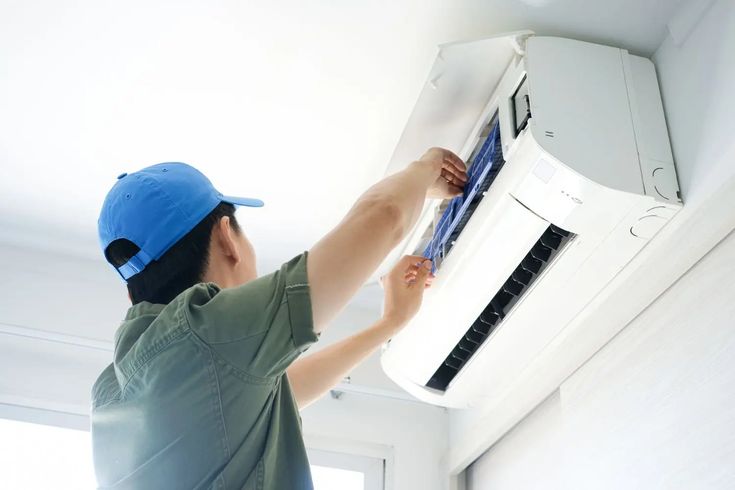
When your aircond runs, it circulates indoor air through its filters. If the filters are clean, they trap dust, particles, and some airborne pollutants. This helps reduce the concentration of haze particles inside your home.
However, if your filters are clogged with dust and debris, running your aircond can make things worse. It may circulate dirty air back into the room. That’s like using a dirty sponge to clean your kitchen counter — it spreads the mess instead of removing it.
During haze season, it’s actually recommended to:
- Keep windows and doors closed.
- Run your aircond in “cool” or “dry” mode.
- Ensure filters are cleaned regularly.
- Consider upgrading to higher-efficiency filters if possible.
If your aircond includes features like plasma filters or ionizers, they can offer additional air-cleaning benefits.
In simple terms, a clean aircond becomes your ally during haze season. A dirty one becomes your enemy.
When Running Your Aircond Helps
Running your aircond helps when:
- Your filters are clean.
- The system is properly serviced.
- Windows and doors remain closed.
- The unit doesn’t pull in outside air directly.
Most residential split units in Malaysia recirculate indoor air rather than pulling air from outside. That’s good news. It means you’re not sucking in more haze from outdoors.
By keeping the air moving and passing through filters, you reduce particle buildup. You also maintain comfortable temperature and humidity levels, which makes breathing easier.
Humidity control is especially important. High humidity can make haze feel heavier. A dehumidified space feels fresher and lighter.
Think of your aircond as an indoor air manager. When maintained well, it creates a controlled environment where haze intrusion is minimized.
When Running Your Aircond Can Make Things Worse
Now let’s talk about the other side.
If your aircond hasn’t been serviced in months — or worse, years — haze season is not the time to ignore it.
Dirty filters mean:
- Reduced airflow.
- Dust circulation.
- Higher electricity consumption.
- Strain on the compressor.
- Poor cooling efficiency.
When airflow is restricted, the unit works harder. That increases your electricity bill and reduces lifespan. On top of that, clogged filters can’t trap new particles effectively.
Imagine trying to breathe through a mask that hasn’t been washed in weeks. That’s what your aircond experiences.
If you notice weak airflow, strange smells, or increased electricity bills, it’s a sign your unit needs attention.
And this is where professional servicing becomes critical.
How JB Cool Care Helps You Stay Safe During Haze
If you’re in Johor Bahru, JB Cool Care understands exactly how haze season affects local homes and businesses. Haze isn’t just a weather inconvenience here — it’s an annual challenge.
Professional aircond servicing ensures:
- Filters are thoroughly cleaned or replaced.
- Coils are free from dirt buildup.
- Drainage systems are unclogged.
- Airflow is optimized.
- Units run efficiently.
A properly serviced aircond doesn’t just cool better — it protects better.
Instead of guessing whether your unit is helping or harming your indoor air quality, you can rely on expert assessment. Prevention is always cheaper than repair.
You can learn more or book a service at jbcoolcare.com to ensure your system is haze-ready.
Conclusion: So, More or Less? The Final Answer
So, should you run your aircond more or less during haze season?
Run it — but run it smartly.
A clean, well-maintained aircond improves indoor air circulation, reduces humidity, and helps trap airborne particles. Avoiding it completely may lead to stagnant, polluted indoor air.
The real decision isn’t about running it more or less.
It’s about whether your aircond is ready to handle haze season.
If it’s clean and serviced, turn it on with confidence. If not, fix that first.
Your lungs will thank you.
FAQs
1. Does aircond bring in outside haze air?
Most split air conditioners recirculate indoor air and do not pull air directly from outside.
2. How often should I clean my aircond during haze season?
It’s recommended to clean filters at least once every 2–4 weeks during heavy haze periods.
3. Can aircond remove PM2.5 particles?
Standard filters remove larger dust particles. For PM2.5, higher-efficiency filters or air purifiers are more effective.
4. Should I use an air purifier with my aircond?
Yes, combining both provides better air quality control during haze season.
5. Where can I service my aircond in Johor Bahru?
You can book professional servicing with JB Cool Care at jbcoolcare.com.
Please don’t forget to leave a review.